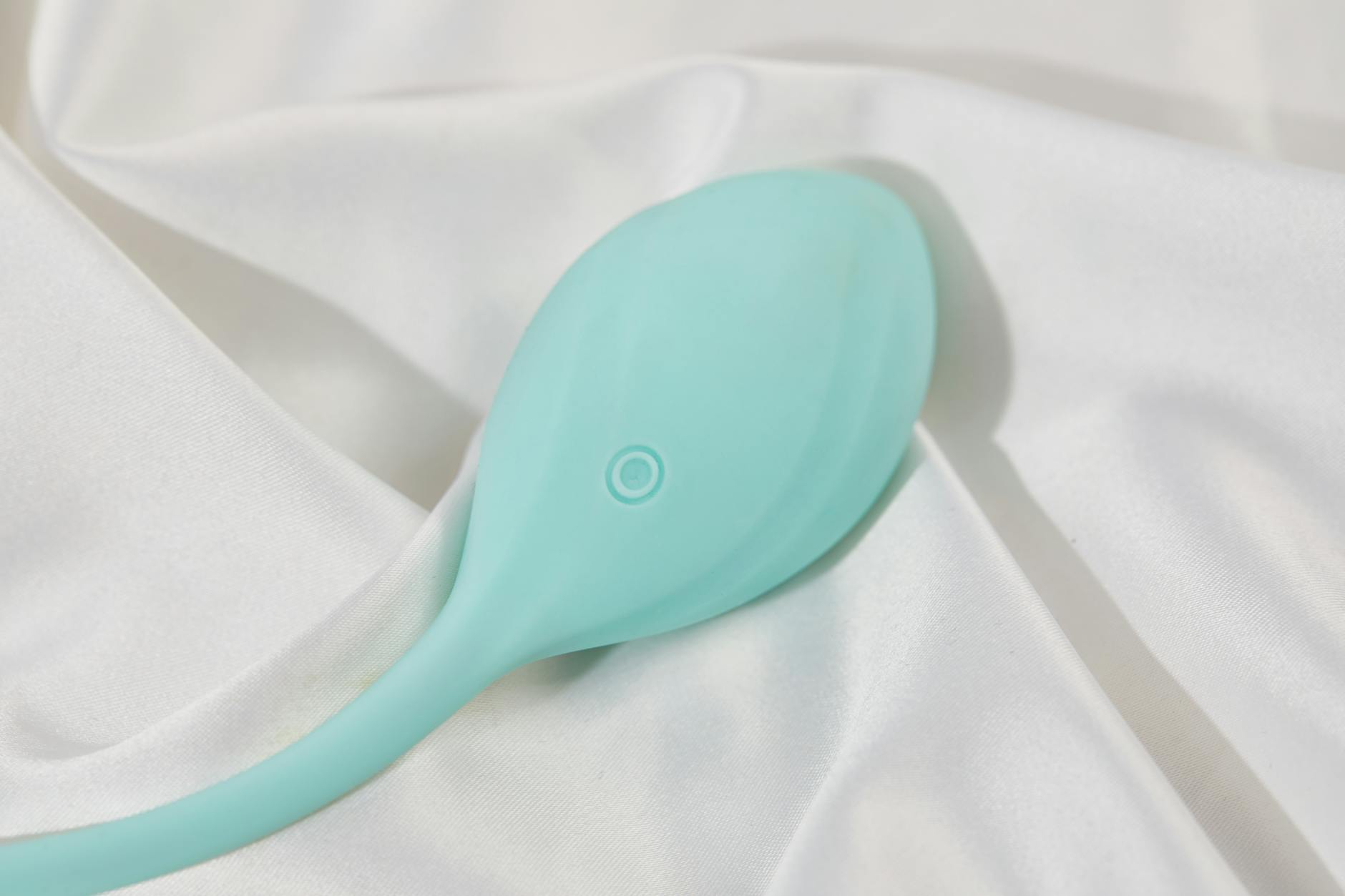
How Long to Adjust to Lemon Vibrators After Using Traditional Toys
Your body needs time to recalibrate. Here's what the adjustment timeline actually looks like, why suction feels so different, and how to make the switch without frustration.
If you've spent years with a bullet vibrator or wand, switching to a lemon clitoral vibrator feels genuinely strange at first. That's not a sign something's wrong. It's actually a sign your nervous system is doing exactly what it should do: noticing that the input has changed.
The adjustment timeline depends on three things: how long you've been using traditional vibrators, how sensitive your clitoris is, and whether you're giving yourself permission to slow down. Most people report a noticeable shift within two to four weeks of consistent use. But that doesn't mean you'll have an orgasm on week two. It means you'll stop fighting the sensation and start understanding it.
Your clitoris is wired with thousands of nerve endings, and those nerves have been trained to recognize one specific type of signal: direct percussion (the rapid up-and-down of a traditional vibrator). The lemon vibrator uses suction instead, which creates a pulling sensation that doesn't mimic anything your body has felt before.
Week one usually goes like this: the sensation is overwhelming, weaker than expected, confusing, or some combination of all three. You might find yourself reaching for your old vibrator halfway through because it feels more familiar. That's completely normal. Your brain is asking "Wait, what am I supposed to do with this?"
Don't panic. Your clitoris isn't broken, and the lemon vibrator isn't wrong. You're just in the phase where the new input doesn't match the old template yet.
Between days seven and twenty-one, something shifts. Your nervous system starts to recognize the suction pattern as distinct information. You'll probably notice that:
The sensation stops feeling quite so alien.
You can isolate which patterns feel better than others.
Lower intensity settings (patterns 1 and 2) might suddenly feel more pleasurable than they did on day three.
Your arousal actually starts to build with the sensation, rather than despite it.
This is where most people report their first real moment of "Oh, I get it now." It might not be an orgasm yet. It might just be a moment where your body stops resisting and starts cooperating.
Many couples going through this transition together find that week two is when the skeptical partner starts to understand the appeal. The learning curve is real, and your partner benefits from witnessing it. This is a good time to talk about what you're noticing so they understand it's not a toy problem. It's a recalibration story.
By week four, most people have moved past the adjustment phase and into the integration phase. Your clitoris has started to recognize the suction sensation as reliable and distinct. You're not comparing it to your old vibrator anymore. You're just... using it.
This is also when individual variation shows up. Some people find that suction is wildly more effective than percussion ever was. Others find it feels equally good, just different. A smaller number of people discover that they're actually a percussion person and lemon vibrators aren't their match. All three outcomes are legitimate.
If you're not seeing results by week six, the issue usually isn't adjustment. It's usually one of three things: intensity expectation (you're expecting earthquake-level sensation when you should start at pattern 1), application technique (angle and contact pressure matter more with suction), or the specific toy isn't the right fit for your anatomy. That's when testing a different intensity level or reading through the care guide can help.
Here's the neurology: your clitoris has thousands of mechanoreceptors (touch sensors). They're tuned to detect different types of stimulation. Traditional vibrators primarily activate the rapid-adaptation receptors that fire quickly and then reset. This creates that buzzing sensation.
Suction, by contrast, activates sustained-pressure receptors that respond to gradual changes. The lem vibrator pulls tissue gently upward, creating a sensation that's more about sustained pressure and rhythmic waves than rapid firing. Your body literally has to recruit different nerve pathways to process it.
This is why people often say suction feels "softer" or "more internal" even though it's being applied externally. Your nervous system is processing genuinely different input. It's not better or worse. It's orthogonal. And adjustment takes time because your nervous system is learning a new language.
You don't have to go cold turkey. Some people find that using their old vibrator for the first five minutes of a session, then switching to a lemon vibrator, helps their body bridge the gap. This isn't cheating. It's intelligent adaptation.
The biological principle here is that your nervous system learns through contrast. By alternating, you're teaching your clitoris that both types of sensation are safe and pleasurable. Over time, you'll probably find yourself reaching for the lemon vibrator first because it becomes the default.
One of the most common mistakes people make during adjustment is starting too high. Because suction feels different from percussion, many folks assume they need a higher intensity to achieve the same result. The opposite is actually true.
Start at pattern 1 or 2 for your first two weeks. This isn't caution. It's strategy. Lower intensity gives your nervous system space to decode the sensation without overload. You can always increase. You can't un-ring a bell if you've startled your system.
After three weeks, try bumping up to pattern 3 or 4 and notice what changes. Some people find that moderate intensity is their sweet spot. Others eventually work up to the stronger patterns. But the adjustment is smoother when you respect the learning curve.
If you're past eight weeks of consistent use (three to four times per week) and you're still not experiencing pleasure or orgasm with the lemon vibrator, something else might be at play. Medications, hormonal shifts, relationship stress, or past trauma can all flatten response to any toy, new or old. This isn't failure. It's information.
This is a good moment to check in with yourself: Are you enjoying the sensation at all, even if orgasm isn't happening? If yes, you might just need more time. If no, the toy might genuinely not be your match, and that's worth accepting.
For people with a history of trauma or sensory sensitivity, why lemon vibrators work better for sensitive nervous systems digs into how suction can actually feel less triggering than percussion for some folks. But individual responses vary wildly.
If you're exploring the lemon vibrator with a partner, the adjustment timeline becomes a shared learning experience rather than a solo puzzle. Your partner gets to witness your nervous system learning something new, which builds genuine intimacy.
The key is separating "I'm adjusting to a new sensation" from "there's a problem with our sex." If your partner equates the adjustment period with dissatisfaction, you'll both spiral. Instead, frame it as "My body is learning something new and I'm curious about it. This might take a few weeks."
Most partners find that once you've integrated the lemon vibrator into your pleasure repertoire, your confidence actually carries over into the rest of your sex life. You've just proven to yourself (and your partner) that you're willing to explore and adapt. That's attractive.
Somewhere around week six to eight, most people plateau. The novelty wears off. The sensation is familiar now. If you were experiencing intense pleasure from the newness, that might drop back down to baseline. This is totally normal and not a sign the toy stopped working.
What often brings people back to engagement is variety. Trying different patterns, using it at different points in your cycle, combining it with other sensations, or bringing it into partnered sex keeps the experience fresh without requiring adjustment all over again.
Think of adjustment as a one-time learning curve. Integration and exploration happen after.
If you're still in week one or two and finding the sensation uncomfortable or confusing, you're adjusting. If you're in week six, the sensation is familiar to you, but you're still not experiencing any pleasure, the toy might not be your match. That's useful information, not failure.
Completely. Alternating between suction and percussion during adjustment can actually speed up the integration process because your nervous system learns through contrast. Use whichever feels better on any given day.
Yes. Hormonal changes, medications that affect sensation, and medical conditions can all extend or flatten the adjustment curve. If you're on a new medication or dealing with a health shift, give yourself an extra two to four weeks before evaluating whether the adjustment is complete.
Adjustment takes longer with sporadic use because your nervous system doesn't get consistent exposure. You might stay in the recalibration phase for two to three months instead of four weeks. If you're only using it occasionally, patience is especially important.
Your partner doesn't have the same nervous system response you do, but they do benefit from understanding what you're experiencing. Talk them through it. Explain why the first two weeks feel weird. That shared language actually strengthens the experience and makes it less awkward.
Consistency matters most. Three to four sessions per week gets you through adjustment faster than sporadic use. Beyond that, patience is the real accelerator. Resisting the urge to compare it constantly to your old vibrator helps too. Your body learns better when you're curious rather than skeptical.
Adjustment to a lemon vibrator is real, it takes time, and it's completely worth it. Your nervous system is adaptable. Give it space to learn. In four to eight weeks, what feels strange now will feel like your new normal. And the pleasure that comes after that learning curve? That's the part people don't always talk about until they've lived it.
If you have questions about technique, maintenance, or how to talk to your partner about any of this, reach out here. We're here to help.