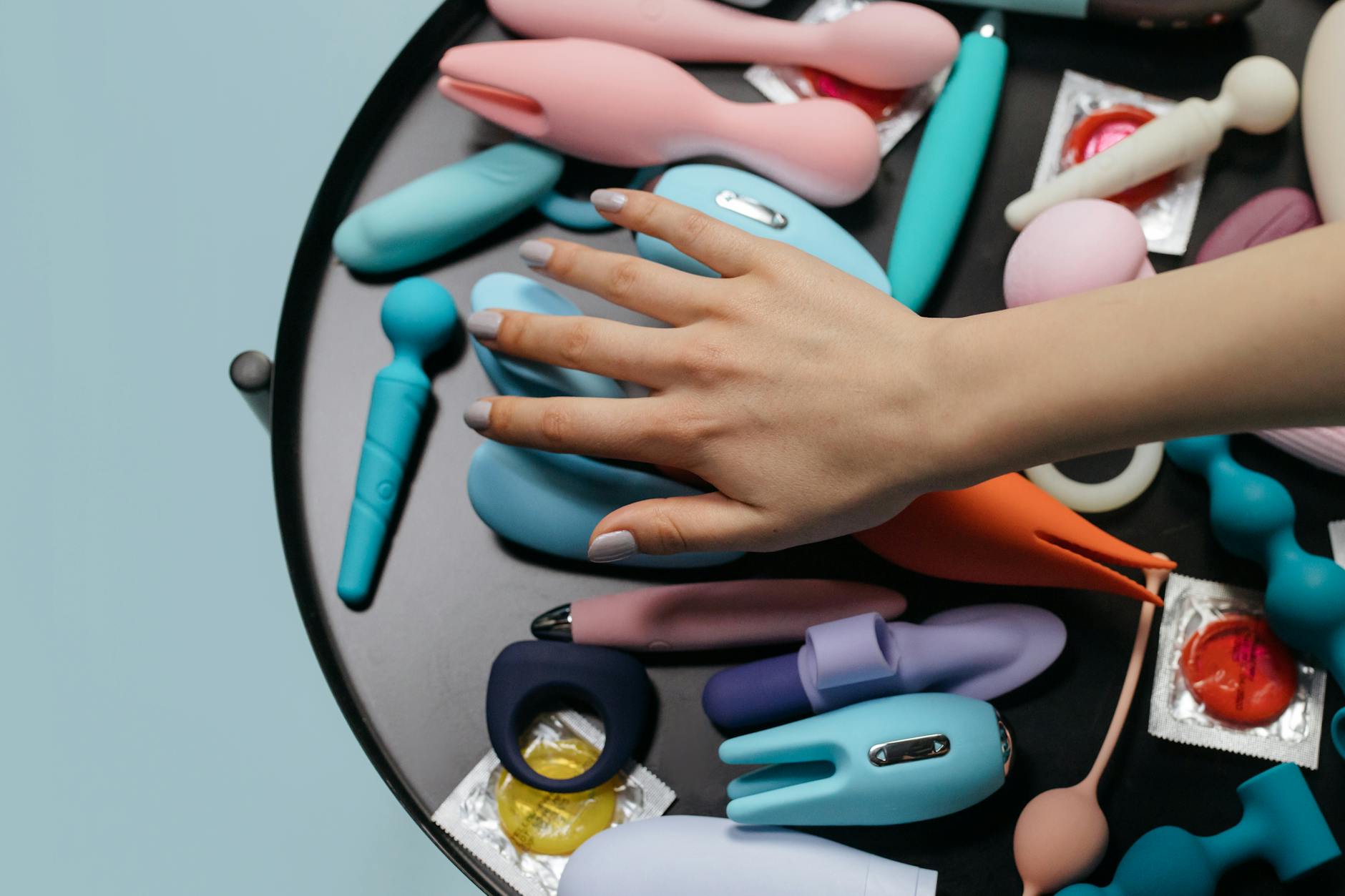
You want to use a lemon clitoral vibrator with someone new, but the math feels impossible. Too early and you risk looking performative or kinky before they even know your middle name. Too late and suddenly it becomes "the thing we've never done" instead of just part of how you have sex.
Most people worry that bringing in a toy signals that something's wrong. The opposite is true. When you introduce a lemon vibrator early in the foreplay phase, you're normalizing it as simply part of your pleasure. It's not a fix. It's not a conversation starter about a problem. It's just what you like.
This is radically different from the narrative most of us inherited, which goes something like: "You stay silent about toys for months or years, then one day bring it up as though you're confessing to something, your partner feels threatened or insecure, and suddenly the toy represents a relationship failure."
That story is exhausting and unnecessary. Here's the science: couples who communicate about pleasure early tend to have stronger sexual confidence throughout the relationship. Not because toys fix things, but because you both learned early that talking about what works is normal.
Try something like: "I've been using a lemon vibrator, and I really like it. Would you want to try it together sometime?" Or: "I find that I come more reliably with clitoral suction. Want to explore that with me?"
That's it. Notice what's missing: apology, explanation of why you need it, comparison to your ex, or any implication that something is broken. You're just stating a preference.
If they say yes, move forward. If they say "I don't think so," that's information too. You can say: "No worries. I'm happy with or without it. But I wanted you to know it's something I like." Then drop it and see what happens. Many partners become curious later when they see your comfort with it.
What you're not doing is negotiating your pleasure to make someone else comfortable. That's the key difference.
Start with your hands first. Build arousal the way you normally would. Make out, touch each other, let things heat up naturally for 10 to 20 minutes. Then, while you're both engaged, say something like: "I want to try the vibrator now. Come closer."
Don't make a production of reaching for it. Just get it from the bedside table or wherever it is, the same way you'd reach for lube. Attitude matters here. If you're embarrassed or sheepish, they'll absorb that energy. If you're casual and confident, they will too.
Lemon vibrators work through gentle suction rather than aggressive vibration. This means the sensation is different from what your partner might be used to seeing or feeling. They might want to watch, or they might want to focus on something else. Both are fine.
If you're the partner receiving, start on lower settings. The Lem, for example, works best around patterns 2 through 4 when you're building arousal. You can increase intensity later, but early foreplay typically benefits from building slowly.
There's a myth that introducing a vibrator somehow replaces partnered touch. It doesn't. In fact, your partner becomes more present once the pressure to "do everything" lifts.
Your partner can: kiss you while you use it, use their hands elsewhere on your body, watch your face and adjust based on your responses, take turns between manual stimulation and the vibrator, or simply hold you while you focus on sensation.
The key is that nothing they do is suddenly wrong. They're not competing with the toy. They're participating in your pleasure, which is the whole point.
If you're introducing the vibrator as the receptive partner, your partner might feel nervous about "knowing what to do." Simple reassurance works: "Just keep doing what feels good. I'll guide you if I need to." That removes the pressure of learning a new technique.
Moment one: laughter or novelty. It happens. Someone laughs at the shape, the sound, or the general situation. Laugh with them. The vibrator can handle it. This is actually healthy. You're not treating pleasure like a solemn ritual.
Moment two: they go quiet or seem uncomfortable. Check in without making it weird. "How are you feeling?" is sufficient. If they need a break, take one. Don't power through for the sake of "trying it out."
Moment three: it doesn't lead to an orgasm. This is normal. Introducing anything new during sex can actually delay orgasm because your brain is busy processing novelty. That's not a failure. Just note what felt good and move on.
Moment four: they seem into it but you're not ready yet. You don't have to come just because they're enthusiastic. Pleasure isn't a performance. If you need to slow down or stop, you can. "I'm enjoying this, but I want to shift gears" is fine.
Don't wait for feedback. If it felt good, it felt good. If it didn't, you'll know. The second time you introduce it, it's already less novel, which often means more arousal and better sensation.
After a few times, you might find that your partner has opinions about when to use it, how to use it, or what it means in the context of your sex life. That's positive. They're engaging with it as part of your shared pleasure, not as a thing you're forcing them to accommodate.
Many couples find that lemon vibrators become a natural part of foreplay without any formal discussion. You use it sometimes, you don't others. It's not a conversation anymore. It's just sex.
If your partner consistently responds with rejection, shame, or turns it into criticism of your body or desires, that's not about the vibrator. That's about how your partner treats you. A sex toy is a tool, not a mirror of relationship health. But how someone responds to your pleasure matters.
If you're using the vibrator to avoid emotional intimacy or as a substitute for connection, that's worth noticing. Early relationships need both physical pleasure and vulnerability. The vibrator enhances pleasure, but it doesn't build trust. Only honesty and showing up do that.
Couples who talk openly about pleasure early establish a pattern. You learn that you can ask for what you want. You learn that your partner's pleasure matters and that you can be part of it. You learn that sex is collaborative, not performative.
Introducing a lemon clitoral vibrator during early foreplay does all of that at once. You're not waiting for permission. You're not hiding something. You're inviting your partner into the way you actually experience pleasure.
That's the foundation of good sex, and good relationships. Everything else is just technique.
Not at all. Introducing a lemon vibrator early actually takes pressure off both of you. You're not pretending to come easily, and your partner isn't stuck trying to be the sole source of pleasure. It's honest, and honesty builds intimacy faster than any performance does.
That's a common fear, but it's his insecurity, not your responsibility to manage. You can reassure them once: "I really enjoy you. This is just how my body works best." If they keep bringing it up as a threat, that's information about how they handle your pleasure. Watch for that pattern.
Just bring it up casually, the way you'd mention any preference. "I use a clitoral vibrator, and I'd love to try it with you sometime." You don't need permission or a formal conversation. You're informing them, not asking for approval.
Yes. Some partners love having a role in the toy. You might say, "Want to try using this on me?" If they're interested, give them a quick demo of what feels good. If they'd rather not, that's fine too.
If your partner is looking for an exit, a vibrator isn't the problem. The problem is that you're with someone who doesn't want to show up for the full experience. Good partners view vibrators as an addition to foreplay, not a replacement. If yours does, that's worth addressing separately.
As long as it feels good. Foreplay can be 10 minutes or 45 minutes. The vibrator doesn't change that timeline. It's just one tool you're using during that time. Focus on what feels good, not the clock.
Using a lemon clitoral vibrator with a new partner isn't a risk. It's actually a smart move. You're establishing early that your pleasure matters, that communication is normal, and that sex is collaborative. Those three things make every other part of a relationship easier.
Start the conversation whenever you're ready. Then watch what happens when you stop apologizing for knowing what you like.
If you have more questions about introducing toys or navigating intimacy with a new partner, get in touch. We're here to help.