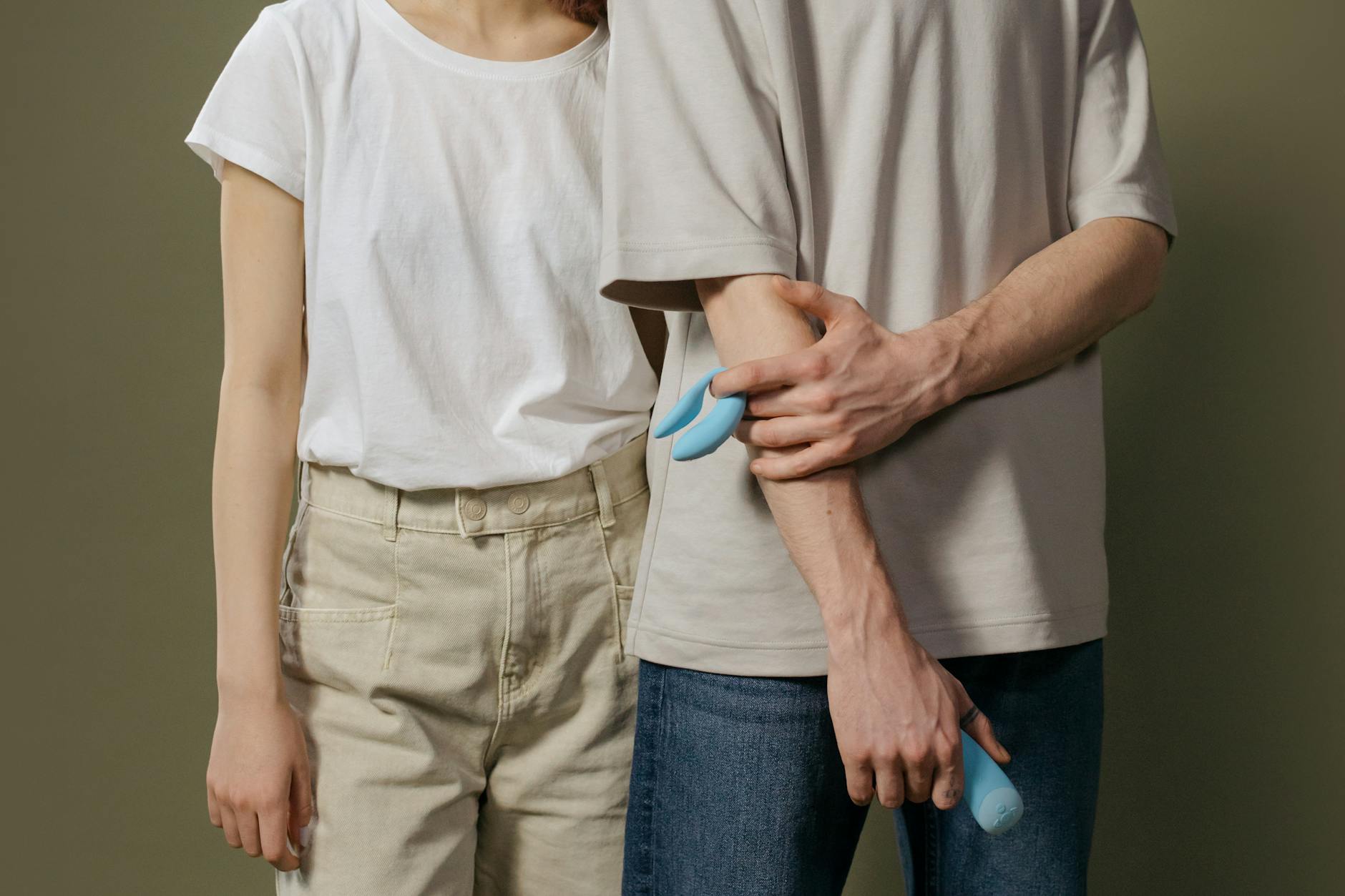
How to Use Lemon Vibrators With a Skeptical Partner
Your partner thinks vibrators are unnecessary or threatening. Here's how lemon clitoral vibrators actually deepen partnered sex, plus the conversation starters that work.
Honestly, the resistance makes sense. If a partner has spent years believing their hands and body are enough, introducing a lemon clitoral vibrator can feel like criticism. Like you're saying they're not doing the job. That's not what's happening, but that's what the silence around it usually communicates.
When someone pushes back on sex toys, they're usually expressing one of three fears. Knowing which one you're dealing with changes how you approach it.
Fear 1: Inadequacy. He thinks "she wants a vibrator" means "I'm not enough." This is ego, yes, but it's also biology. Men in particular are socialized to believe their bodies should handle pleasure alone. A toy feels like a failure.
Fear 2: Replacement anxiety. The unspoken worry that if you like the lemon vibrator too much, you'll stop wanting partnered sex. That the device becomes the primary pleasure source.
Fear 3: Loss of control. Some partners like feeling that they're driving the experience. A vibrator in someone else's hands means they're no longer the only variable. That can feel threatening, especially if the relationship has power dynamics that feel important to them.
None of these are logical. All of them are human. The conversation that works acknowledges the fear first, then reframes the vibrator.
Instead of "I want to try toys," try this: "I want more of what we already have. I've noticed my body responds faster to certain kinds of stimulation, and I think this could help us get there together more often."
Notice what shifted. You're not asking for a toy. You're asking for more pleasure, more frequency, more of the thing he already wants. The lemon vibrator is just the tool that makes it possible.
If he says "I thought my hands were enough," here's the truth you can share: hands are wonderful. They're also limited by grip strength, finger fatigue, and the angle of approach. A lemon clitoral vibrator doesn't replace what hands do. It adds something hands literally cannot do. Air-suction stimulation feels completely different from pressure. It's not better or worse. It's a different nerve pathway.
Timing matters more than most people think. Don't bring this up three hours before sex. Don't bring it up during conflict. The best time is during a calm moment when you're both actually connected, ideally not in the bedroom.
You might say: "I've been thinking about our sex life. I love what we do. I also think there's something I want to try that might actually feel really good for both of us. Would you be open to hearing about it?"
Then show him. Not the toy itself, yet. Show him a two-minute video of how a lemon vibrator actually works. Let him see it's not a massive device. Let him see it's used during partnered sex, not instead of it. Let him hear why people choose air-suction stimulation over traditional vibration. Knowledge reduces fear.
When you do show him the actual lemon clitoral vibrator, hold it in your hand. Let him hold it. Let him feel the weight, the texture. Demystification defuses defensiveness.
DO: Start with non-sexual touch. Use the vibrator on your arm, your neck, your inner wrist while you're kissing. Let him feel it working on your body in a low-stakes context. This removes the pressure to perform and lets him get curious.
DO: Hand him the control. Seriously. Let him hold the vibrator while you guide his hand. This is huge psychologically. He's not watching something happen to you. He's making it happen. He's in charge of the experience.
DO: Give feedback in real time. "That feels amazing." "Move it slightly left." "That pattern is incredible." Positive, specific feedback reminds him that this is working because of what you both are doing together.
DO NOT: Use it during penetration the first time. Save that for later, once he's comfortable. Start with foreplay, with him involved, with his hands also on your body.
DO NOT: Ignore him or make him feel like he's watching from the sidelines. This is a shared experience. Your pleasure is his pleasure if the relationship is solid. Remind him of that.
Here's what I see happen in couples who move past the resistance: the partner becomes genuinely interested in lemon vibrators because he realizes they're not a threat. They're a tool that lets him give you something he physically cannot alone. That reframe is powerful.
Many partners tell me they actually prefer partnered sex with the vibrator because the experience changes. Your arousal builds faster. You're more responsive. You're more present. The entire dynamic shifts from him trying to achieve something to both of you experiencing something together.
Once you've had that experience, the skepticism usually dissolves. It's not because he's been convinced by logic. It's because he felt the difference.
"Won't you become dependent on it?" No. Your body doesn't get addicted to stimulation types. You might prefer this kind because it feels better, but preference isn't dependency. You still orgasm from other kinds of touch. You've just expanded the menu.
"Doesn't that mean I'm not enough?" Your pleasure expanding is not a reflection of his adequacy. It's a reflection of the complexity of human sexuality. His hands are still essential. The vibrator is supplementary.
"What if I can't stay hard when she's using it?" This is actually common, and it's not a problem. If he's holding the vibrator while you're aroused, his physical response might change. That's okay. He can still use his hands, his body, his presence. Performance pressure is what kills erections. Removing the expectation that he has to do everything alone often helps.
After the initial resistance fades, something interesting happens. Partners often start requesting the lemon vibrator. "Can we use that tonight?" becomes normal. It stops feeling like compromise and starts feeling like abundance. Like you both agree that pleasure matters enough to be intentional about it.
This is where skepticism becomes partnership. He's no longer defending himself against the toy. He's choosing it because it deepens your shared experience. That's a different thing entirely.
Partners often link sexual performance to masculinity or adequacy, even if they intellectually know that's not how pleasure works. A vibrator can feel like external judgment. The best response is reassurance plus education. Show him research on air-suction stimulation. Show him couples who use vibrators report higher satisfaction. Make it data, not criticism.
Completely. You don't have to introduce toys. But if you want them, that's valid too. Mismatched desires around toys are relationship conversations, not personal failures. If he's fundamentally opposed and you're fundamentally interested, that's worth exploring in couples counseling, not pretending the desire goes away.
No. Surprise toys erode trust. If you want to explore solo first to build confidence, that's fine. But bringing it into partnered sex should be a conversation. Honesty builds the safety that makes the experience better.
Respect that. Not every tool works for every person. But "I don't want to use it" is different from "you can't have one." You can use lemon clitoral vibrators during solo sex or with partners who are interested. You don't need permission for your own pleasure.
Start smaller. Don't lead with toys. Lead with wanting to explore more together, wanting better communication about what feels good, wanting to try new things. Once that foundation is solid, introducing a specific tool feels less threatening because the frame is already: we're building this together.
No. Using a lemon vibrator is not about love. It's about expanding sensation. You can adore your partner and still want different kinds of physical stimulus. Those two things coexist.
Honestly, the vibrator is secondary. What matters is that you're both willing to talk about pleasure, to think about what feels good, to experiment together. That willingness is what actually deepens intimacy. The lemon clitoral vibrator is just the vehicle for it.
If you want to move past skepticism, start with curiosity about why he feels resistant. Listen. Acknowledge the fear. Then introduce the tool as a way to give each other something better, not to replace anything. That frame changes everything.
Your pleasure deserves thoughtfulness. So does his comfort. The conversation that honors both is the one that actually works.