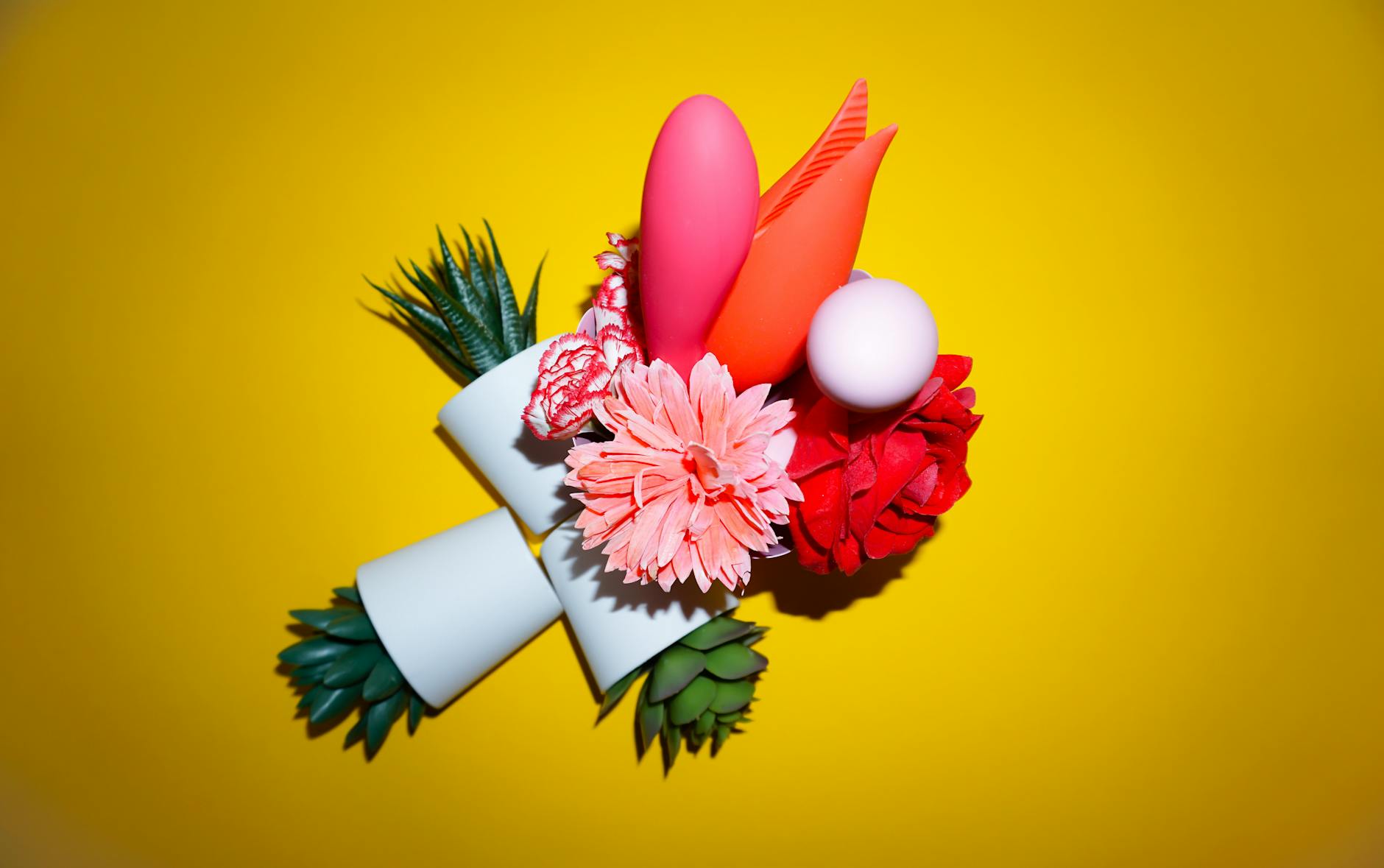
Let's be real: most people buy a lemon vibrator and immediately crank it to the highest setting. Then they get bored, or it's too much, and they think something's wrong with them. Nothing is. You just haven't found your pattern yet.
The patterns on lemon vibrators aren't a gimmick. They're genuinely different sensations, and the one that feels mediocre on day one might be your favorite by week three once your body learns to recognize it. I want to walk you through how vibration actually works on your nervous system, why some patterns hit different, and how to troubleshoot when nothing feels right.
Your nerve endings don't experience vibration as a single sensation. They experience it as a rhythm, a frequency, and an intensity, and your brain combines all three into what you feel. A steady hum at setting 3 on a lemon vibrator feels nothing like a pattern that pulses between settings 5 and 2, even if the average intensity is the same.
This is why some people swear by waves and pulses while others find them annoying and prefer a clean, constant buzz. Your nervous system is literally wired differently. One isn't better than the other. They're just different messages to your body.
Think of it like music. A sustained note feels completely different from a staccato rhythm, even if they're in the same key. Your clitoris picks up on those differences the same way your ear does.
Here's the mistake most people make. They use "intensity" and "pattern" as synonyms. They're not.
Intensity is how strong the vibration is. Setting 1 is gentler than setting 5. That's intensity.
Pattern is the rhythm or shape of the vibration. A steady pulse is different from a wave, which is different from a flutter, which is different from a constant hum. You could have a steady pulse at setting 7 or a steady pulse at setting 2. Same pattern. Different intensity.
Why does this matter? Because the best pattern at low intensity might feel terrible at high intensity. You might love waves at setting 3 but find waves at setting 6 overwhelming. A lot of people abandon a pattern thinking it's not for them when really they just need to change the intensity.
Start lower than you think you need. You can always go up. You can't unknow what high intensity feels like.
This is the workhorse. It's a continuous rhythm without variation. If you like meditation, rhythm, and predictability, this is your baseline. Most people find it easiest to build toward orgasm with steady patterns because there's no guessing. Your body knows what's coming next.
Best for: First-time use, solo exploration, learning your own body, extended sessions where you want consistency.
Common mistake: Starting too high. A steady pulse at setting 2 feels calm. At setting 7, it can feel relentless and numbing. Stay lower longer.
Waves / Rolling Pattern
This mimics the sensation of a rolling wave. Intensity builds, peaks, drops, and repeats. It's like your vibrator is breathing with you. Some people find this incredibly natural because it matches arousal itself, which builds and releases in waves.
Best for: Extended foreplay, people who like the build-and-release cycle without reaching orgasm yet, solo sessions where you want to explore the journey not just the destination.
Common mistake: Thinking waves are always gentle. They're not. A wave pattern at high intensity can feel more intense than a steady pulse at the same setting because the peak hits harder.
Flutter / Rapid Stutter
This is a quicker, stuttering sensation. Very different from waves. It feels almost trembling, like the vibrator is tapping rapidly on your nerves. This pattern tends to feel very direct and focused.
Best for: People who like quick, concentrated stimulation, those with less sensation sensitivity who need more texture to feel anything, partners who want to use a lemon vibrator together and want quick buildup.
Common mistake: Assuming fast equals intense. Flutter patterns feel different, not necessarily stronger. Some people find them less intense even at high settings.
Pulse / Rhythm
A single pulse or beat pattern. Think of it like a heartbeat. Not continuous, not rolling, just a beat. It's rhythmic and often feels natural because humans are rhythm creatures.
Best for: Rhythmic lovers, people who like defined on-and-off sensations, those who want a pattern that's distinctive but not overwhelming.
Common mistake: Underestimating how satisfying simple can be. A pulse pattern at the right intensity hits different because it's so clear. Try it longer than you think you need to.
Every exploration begins at setting 1 or 2 with a constant pulse or steady pattern. This isn't about pleasure yet. It's about knowing what the vibrator feels like on your body, how you hold it, and what your starting point is. Spend 2-3 minutes just feeling it. No pressure, no goal.
Step 2: Increase intensity slowly, staying with one pattern.
Once you know what setting 2 feels like, try setting 3. Notice the difference. Then 4. Stay with the same pattern. You're learning your nerve sensitivity, not searching for orgasm. This usually takes 5-10 minutes. You might not be aroused yet. That's fine.
Step 3: Once you find a comfortable intensity, try different patterns at that same setting.
Now that you know setting 3 steady feels moderate, try setting 3 waves. Try setting 3 flutter. Notice how different they are even though the intensity is identical. One pattern will probably stand out. That's your baseline.
Write it down. Seriously. "I like setting 4 waves" is way more useful than remembering vaguely that you enjoyed something last week.
Here's something that surprises people. The pattern that felt amazing at the beginning of a session might feel boring by the middle. Your body literally desensitizes to rhythm over time. This is normal and useful.
Let's say you start with setting 3 steady. That feels great for 5 minutes. Then it starts to feel flat. Your instinct might be to crank up the intensity. Sometimes that's right. But first, try changing the pattern. Switch to waves. Switch to flutter. Your nervous system perks back up because it's processing something new.
Many people build longest sessions by starting low and steady, moving to waves in the middle for more stimulation, then potentially finishing with flutter or a higher intensity steady pattern. You're not looking for the perfect one. You're looking for the perfect sequence.
You've tried the patterns. You've adjusted intensity. And it still feels like you're missing something. Here's what's usually happening.
Numbing. If an intensity felt great yesterday and feels numb today, you've desensitized. Take a break. A day or three off resets your nerve sensitivity. This isn't failure. It's your body protecting itself from overstimulation.
Pressure. You're holding it at the wrong angle. The sweet spot isn't always where you think. Move the vibrator slightly. Try different angles. Tilt it differently. Small adjustments change everything.
Lubrication. Dryness changes how vibration feels. It can feel harsh or disconnected. A little water-based lube transforms the sensation. This is especially true for lemon clitoral vibrators that work through suction and vibration together.
Arousal. You might not be aroused enough yet. Vibrators are tools that amplify existing arousal. They don't create it from scratch in most bodies. Spend more time warming up. Read something hot, watch something you like, fantasize, touch yourself first.
Tension. Holding your muscles tight (breath, legs, pelvic floor) blocks sensation. Breathe. Relax intentionally. Let your thighs fall open. Release your shoulders. Pleasure requires ease.
If you're using a lemon vibrator with a partner, communication about intensity becomes important in a different way. One person might think setting 5 is moderate while the other finds it aggressive.
Talk about it in advance, not during. "I like starting here and moving to this pattern" is useful. "Tell me if it's too much" during the moment keeps both people engaged and safe.
Patterns also change how partnered pleasure feels. Steady patterns let your partner hold it still and predictable. Wave patterns require slight movement from them. Some people love having that control. Some find it frustrating. You're not finding the "right" answer. You're finding what works for both of you.
Something interesting happens if you keep using lemon vibrators thoughtfully. Your sensitivity doesn't just increase. It becomes more refined. You pick up on nuances you missed before. Patterns you found boring start feeling interesting because you can hear the rhythm more clearly.
This is why people who've been exploring for a while often say their favorite settings are surprisingly low. They're not desensitized. They're just more attuned. They don't need intensity because they can hear the signal more clearly.
If you ever feel like you're chasing higher and higher settings and never getting anywhere, take it as a sign to reset. Lower intensity, fresh patterns, and genuine arousal almost always feel better than white-knuckling your way through settings 8 and 9.
Not bad. Just potentially limiting. Your body adapts to rhythm. Using the same pattern every time means your sensitivity to it drops over time. Mixing it up keeps pleasure surprising.
Q: Why does my favorite setting change from day to day?
Your nervous system isn't static. Stress, sleep, hormones, arousal level, and how long it's been since you last used your vibrator all affect what feels good. This is normal. It's not that your preference changed. It's that your baseline shifted.
Q: Can I damage myself by using too high intensity?
Nerve damage from vibrators is extremely rare. What's more common is temporary numbness or desensitization if you consistently use very high intensity for long sessions. Lower intensity and pattern variation prevent this naturally.
Q: Which pattern is best for reaching orgasm?
Whichever one gets you there. Seriously. For some people it's steady high intensity. For others it's waves at medium intensity. Start low, notice what builds arousal, and follow that signal. Your body knows what it needs.
Q: Why does the same setting feel different between my lemon vibrator and other toys?
Not all vibrators vibrate the same way. Frequency, amplitude, and how the motor operates vary. A lemon clitoral vibrator uses suction and vibration together, which feels completely different from a traditional vibrator. That's not a flaw. It's a feature. You're learning new language, not comparing versions of the same thing.
Q: How long until I find my perfect setting?
Anywhere from a single session to a few weeks. Most people have a good sense within 3-5 uses. But exploration doesn't stop there. Your preferences will evolve. That's not something to optimize. That's something to enjoy.
Your pleasure deserves attention. Not obsession. Not performance. Attention. Finding your pattern is part of that attention, and there's no rush. The vibrator will still be there tomorrow.