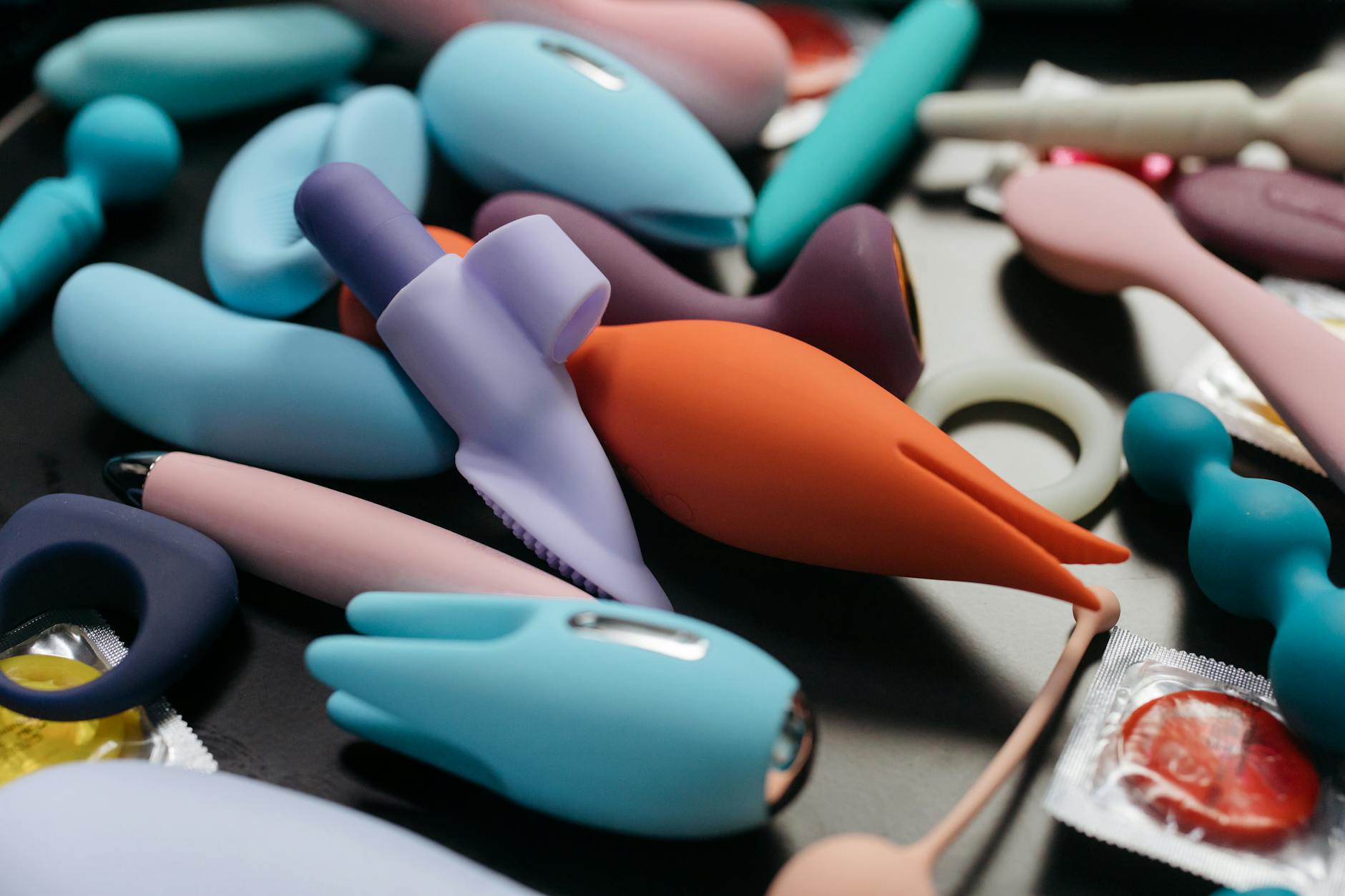
How to Use Lemon Vibrators After Pelvic Floor Dysfunction Recovery
Your pelvic floor needs time to heal, and your nervous system needs reassurance. Here's how lemon clitoral vibrators fit into that recovery without pushing too hard.
If you've been through pelvic floor physical therapy, you know the drill. Physical therapists teach you to breathe, relax, and stop clenching. They retrain your nervous system to trust your body again. But somewhere around week six of recovery, a question usually lands: when can I have sex again?
Let's be clear about what happened. Your pelvic floor muscles tensed up, probably for months or years. Maybe there was pain during sex, or during everyday movement. Maybe your physical therapist found trigger points so tight they hurt to touch. Your nervous system learned to brace, to protect, to say no before your brain even caught up.
Now you've done the work. You've released the tension. Your muscles are longer and looser. Your nervous system is learning that movement and sensation are safe. But your body has muscle memory. And your brain still remembers guarding.
That's where lemon vibrators come in. They're not like traditional vibrators, which can feel intense or demanding on a nervous system still in recovery mode. The lemon's suction-based stimulation works differently. It's about gentle pressure and gradual arousal, not immediate intensity.
Three reasons they're the better choice after pelvic floor dysfunction.
First, suction doesn't demand. A traditional vibrator relies on speed and buzz to create stimulation. That can startle a nervous system that's been protecting itself. Suction works by creating gentle pressure waves. Your body can relax into it instead of bracing against it.
Second, you control the intensity from the start. Lemon vibrators like the lem vibrator have eight intensity settings that start low. You're not negotiating with a vibrator that's too strong. You're building sensation gradually, the way your nervous system needs.
Third, suction mimics natural stimulation. Your body knows this pattern. It's not alien technology landing on sensitive tissue. That familiarity helps your nervous system stay in learning mode instead of defaulting back into protection mode.
Honestly, this depends on where you are in recovery. I'm going to give you a framework, but check with your pelvic floor physical therapist first. They know your specific situation.
Weeks 1-6 of recovery (during active PT). This is about restoring function, not pleasure. Hands and internal massage only if your PT clears it. No vibrators yet. Your nervous system is recalibrating daily.
Weeks 7-12 (early post-PT). If your PT signs off, you can start introducing external stimulation. A lemon clitoral vibrator at settings 1-2 for short sessions (3-5 minutes) is the sweet spot. You're reminding your nervous system that sensation is safe.
Weeks 13 onwards (integration phase). You can explore higher settings and longer sessions if your body responds well. But honor the pace. There's no race.
If pain returns at any point, stop. That's not a setback. That's your nervous system saying it needs more time.
Let's walk through this step by step. Details matter here because your nervous system is sensitive to pressure, rhythm, and surprise.
Start alone. If you have a partner, get comfortable with sensation on your own first. You need to know what your own body's baseline is before adding another person's energy into the room.
Create actual space for it. Not rushed. Not squeezed between other tasks. Fifteen minutes where you're not listening for the mail carrier or thinking about laundry. Your nervous system can tell when you're half-present, and it will stay guarded.
Use water-based lubricant. Even though the lem vibrator does its own thing with suction, lubrication reduces friction and makes the whole experience feel gentler. It also signals to your nervous system that this is going to feel good, not harsh.
Keep your settings low. If the lem vibrator is at setting 1, you should feel a gentle pulse, not vibration. Settings 3-4 are where most people in recovery feel comfortable over time. You can always turn it up. You can't un-feel intensity.
Notice what your body does. Does your pelvic floor relax or tighten? Do you feel arousal building, or just sensation? These are two different things, and recovery is about both. The arousal might take longer to arrive. That's normal.
If you have a partner, the conversation matters more than the toy.
Many couples avoid talking about pelvic floor recovery because it feels clinical or they don't want to "complain." Meanwhile, one partner is wondering why sex feels weird, and the other is worried about causing pain. The vibrator doesn't fix that gap. The conversation does.
Here's what I'd say: "I want to explore sensation again slowly. I want to use a lemon clitoral vibrator because the suction feel is gentler for my nervous system right now. I might need you to just be present, not perform. Are you in?" That's it. No apologies. No editorializing.
Your partner can watch, can be in the room, can hold space. Many couples find that watching their partner's nervous system relax and pleasure return is actually really connecting. It's not the same as partner-focused sex, but it's intimate in a different way.
If you want to include a partner eventually, go slow. Let them use a lemon vibrator on you only after you know your own comfort zone. And communicate constantly. "A little higher." "Slower." "Pause." These small directives keep both nervous systems regulated.
Sometimes recovery stalls. You're past the acute healing window. Your pelvic floor is released. But arousal still feels muted, or sensation feels numb. This is worth troubleshooting.
First, rule out physical stuff. Nerve damage from the original dysfunction is rare but possible. A pelvic floor PT can assess this. Hormonal shifts also matter. If you're on medications that affect sensation, that's information.
Second, check the nervous system angle. Trauma lives in the body. If pelvic floor dysfunction came from pain or a medical event that felt violating, your nervous system might need more than physical recovery. Trauma-informed therapy can help here. It's not overthinking. It's actual neurobiology.
Third, give it more time. Sensation reintegration is slow. You're not broken if it takes three months or six months. You're healing.
Can I use a lemon vibrator while still in physical therapy?
Check with your PT first. Most would say no during active treatment (weeks 1-6), because they're trying to isolate specific muscles. But around week 6-8, when you're shifting from rehabilitation to reintegration, many PTs will clear external stimulation at very low intensities. The lem vibrator's low starting settings make it ideal for this phase.
Will using a lemon clitoral vibrator slow my recovery?
No, if you're using it correctly. Gentle stimulation actually helps your nervous system learn that sensation is safe. It's the equivalent of gradually returning to exercise after injury. The key word is gradual. If you jump to intense stimulation too soon, yes, that could aggravate things. Start low, stay patient.
How long until I can use higher intensity settings?
Every body is different, but most people can work up to settings 5-6 by week 16-20 of recovery. Some people plateau at 4-5 and that's totally fine. You're not trying to hit some arbitrary intensity number. You're exploring what feels good to your healed nervous system.
Should I tell my partner I'm using a lemon vibrator during recovery?
Yes. Not because you're doing anything wrong, but because honesty builds safety. If your partner feels surprised or excluded, they might interpret it as rejection or something they did. A simple "I'm exploring sensation on my own to help with recovery" reframes it as health, not secrecy.
Can I use a lemon vibrator during partnered sex after recovery?
Absolutely. Many people find that adding the lem vibrator to partnered sex actually deepens relaxation and arousal. It's not a replacement for partner touch. It's an addition. Some couples use it during foreplay, some during penetration. There's no rule. Just communication.
What if I still feel pain when using a lemon vibrator?
Stop immediately. Pain is information. It might mean you need more time, or your PT needs to revisit a specific area, or you need trauma-informed support. It doesn't mean you're broken. It means your nervous system needs something different right now. Respect that signal.
Pelvic floor dysfunction feels like a detour when you're in it. But recovery is actually a chance to rebuild your relationship with sensation from the ground up. You get to ask: what do I actually want? What settings feel good to me? What rhythm does my body prefer? What helps me relax?
Most people don't get that luxury. They stumble through sex the way they stumbled into it, never really asking these questions.
You get to ask. A lemon vibrator is just a tool. But it's a tool that lets you explore slowly, without pressure, without anybody else's nervous system in the room. That's actually powerful.
If you have questions about your specific recovery timeline or whether a lemon clitoral vibrator is the right fit for where you are, reach out to Hello Nancy. We're here to help you navigate this part of the journey.